Posts

Parotid Tumor and Early Signs – Essential to Know About By Consulting With ENT Specialist

Image
It may cause swelling in the face or jaw that usually isn’t painful, Parotid tumor may result in varied symptoms like numbness, burning or prickling sensations in the face, or a loss of facial movement. If diagnosed, surgery is the only option to remove parotid tumor. Salivary gland tumors can develop at any age; while the parotid tumors develop in older adults. In addition, radiation that is used for treating neck and head cancers may increase your risk o parotid or salivary gland tumors. Tumor Is Cancer Beginning in One of Your Salivary Glands Salivary gland tumor or parotid tumor is cancer beginning in one of your salivary glands – not just a single disease. According to doctors, every man and woman has varied salivary glands near and inside the mouth. Many types of cancerous or benign tumors and cancer can develop in these salivary glands. These types of cancers aren’t common and make up less in comparison to one percent of cancer in the United States. Parotid Tumor Can Occur in I...

What is a Parotid Tumor?

Image
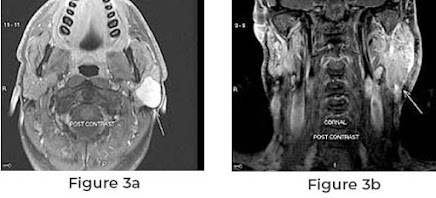
The parotid and facelift is the salivary gland located behind the ascending ramus of the mandible. It is the seat of the most frequent tumors, in particular pleomorphic adenomas also called mixed tumors. Their treatment is only surgical for parotid and facelift , it is an ablation of the entire parotid salivary gland or parotidectomy, after dissection of the facial nerve (responsible for the mobility of the face) which passes inside the gland. Experience of this type of surgery and appropriate equipment (computerized control of the facial nerve or nerve monitoring) can minimize the risks of surgery. The parotid and facelift is most often revealed by a mass or lump palpated by the patient or his doctor, it is rarely painful or associated with lymph nodes or facial paralysis. The examination that will confirm the diagnosis and is non-invasive is ultrasound, but magnetic resonance imaging (MRI) is the reference exploration because it allows the tumor to be perfectly visualized, it also a...

What Is Parotidectomy?

Image
Parotidectomy and facelift is the partial or total removal of the parotid gland. Every human has two, one on the right and one on the left in front of each ear (they are the ones that swell and become visible during mumps). They are crossed by the facial nerve. This nerve allows the motor skills of half of the face (one for each side of the face). Consultation The appearance of a mass, most often painless, in the parotid region leads to consultation. The clinical examination helps guide the diagnosis. Examinations (scanner, MRI) make it possible to refine the diagnosis. In the vast majority of cases, it is a tumor of which it is essential to specify the benign or malignant nature (in approximately 70% of cases, it is a benign tumor). Parotidectomy and facelift, associated with a histological (microscopic) examination, is both the means to establish the diagnosis with certainty and at the same time to carry out the treatment. Much more rarely, the pathology is of lithiasic origin (calc...

What Is Parotid Tumor Surgery?

Image
Parotid tumor surgery involves removing all or part of the parotid gland, where salivary gland tumors most often start. There are 2 types of parotid tumor surgery . Total parotidectomy removes the entire parotid gland. It is used to treat tumors located in the deep lobe of the parotid gland. Since the facial nerve runs through this part of the parotid gland, the surgeon will attempt to remove the tumor without damaging the nerve. If the tumor has reached the nerve or has spread along the nerve, the surgeon will need to remove part of the nerve to make sure all the cancer has been removed. A superficial parotid tumor surgery is done to remove only the superficial lobe of the parotid gland where the tumor is. The superficial lobe is the part of the parotid gland that is located closest to the front of the neck. Since the facial nerve does not cross this part of the parotid gland, there is less risk of nerve damage after a superficial parotidectomy than after a total parotidectomy. How is...

What Is Mucoepidermoid Tumour?

Image
The carcinoma of the mucoepidermoid glands is a separate subtype of the malignancy that attacks these glands. The three primary cell types that make up these structures are squamous cells, mucus-secreting cells, and intermediate cells. (1) Masson and Berger characterised mucoepidermoid carcinomas specifically for the first time in 1924. Since then, they have been acknowledged as a prevalent type of salivary gland tumour. Variable proportions of intermediate, mucous, and epidermoid cells make up the bulk of the tumour. The intermediate cells are typically the most common, and their appearance can range from small basal cells with little basophilic cytoplasm to larger, oval cells with copious pale eosinophilic cytoplasm that seems to merge with epidermoid or mucous cells. These cells may also contain eosinophilic or very light cytoplasm or facial nerve cancer . Mucocytes, the cells responsible for producing mucus, can exist single or in groups. These cells have a tiny, peripherally locat...

How to Treat Facial Nerve Cancer

Image
Standard treatment for advanced facial nerve schwannomas and hemangiomas is surgical excision. The surgical removal approach is determined by the size of the tumour and whether or not both ears are affected. Primary parotid cancer refers to malignancies that originate in the parotid gland; secondary tumours, such as those that spread from the skin, are referred to by the latter term (i.e., metastatic parotid cancer). Other diseases, such as skin cancer, mucoepidermoid tumor , can also cause facial paralysis, but this is far less common. Cancer can cause temporary or permanent facial paralysis by causing damage to the facial nerve. Typically, this facial weakness develops gradually over several weeks or months. During cancer surgery, it is routine practise to amputate the facial nerve if the disease has spread to that area. Even if the patient has no history of facial paralysis, it may be necessary to sever the face nerve in order to perform cancer surgery. In the absence of face reanim...

Methods for Minimizing Scarring

Image
Most tumours in the salivary glands develop in the parotid glands, which are one of the major salivary glands. Location of these glands is in close proximity to the ears. Even while most tumours in the parotid gland are harmless, some can develop into cancer if left untreated. This non-traditional parotidectomy and facelift approach successfully removes the tumour without damaging the facial nerve. It has the added benefit of improving the patient's appearance without increasing their vulnerability to complications. If you understand correctly, a facelift incision can also be used for a parotidectomy Patients who have undergone a parotidectomy could find that their appearance has changed depending on the technique used for incision and healing. This happens all the time. Performing a parotidectomy through the same incision as a facelift is a complex treatment that requires the expertise of both our head and neck surgeons and our plastic surgeons to effectively remove parotid gland...